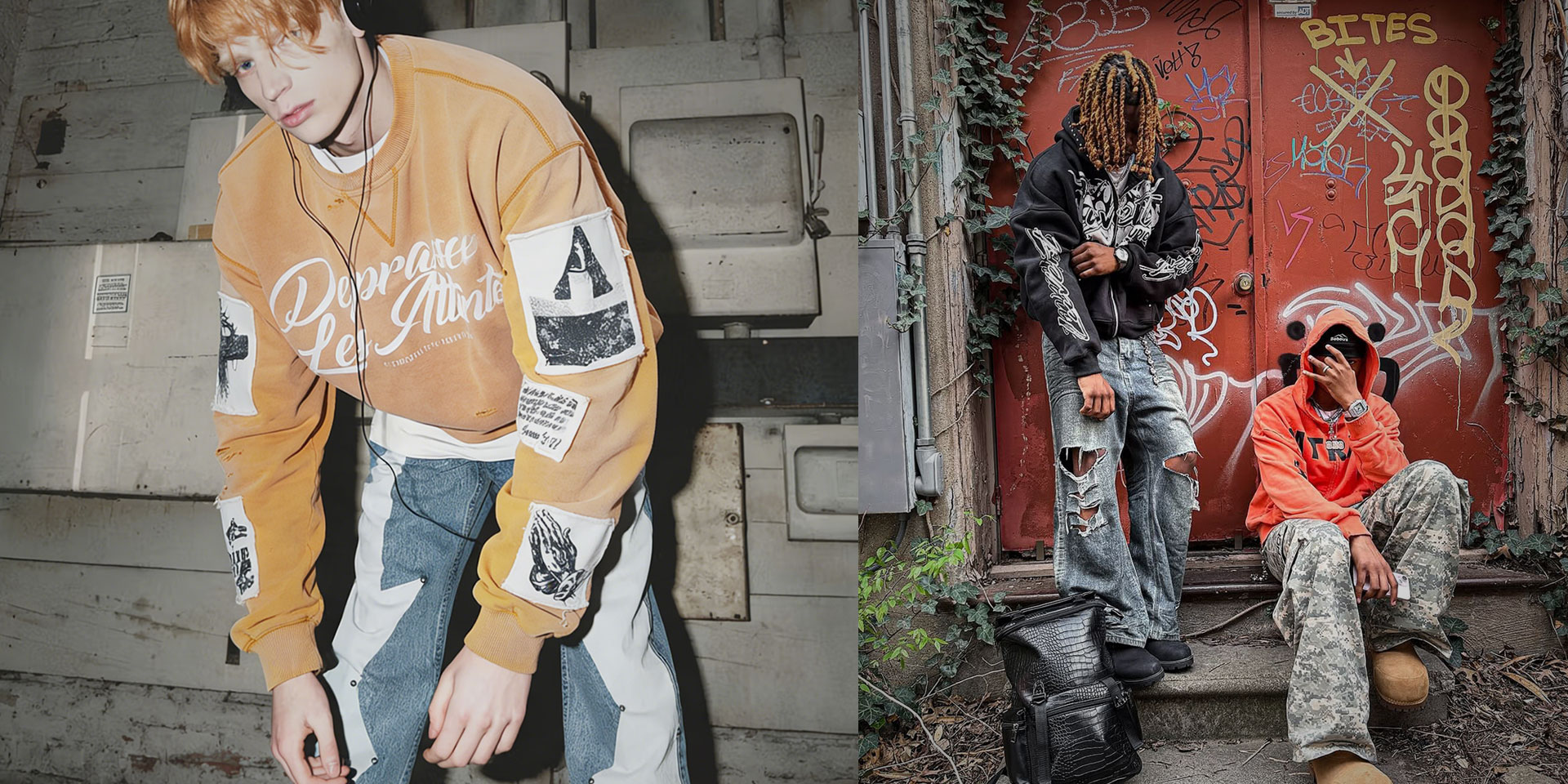
A Hoodie Is Easy. A Real Streetwear Silhouette Isn’t: How Men’s Brands Can Tell Who Actually Gets the Shape
A lot of men’s streetwear looks right on the moodboard and wrong the second it hits a body. The graphic may be clean. The wash may look expensive. The fabric may even feel solid in hand. But then the tee hangs too long, the hoodie balloons instead of dropping, or the pants go wide without ever becoming properly baggy. When that happens, the issue usually is not taste alone. It is factory understanding.
On paper, many factories can make hoodies, tees, cargos, denim, and cut-and-sew sets. That still does not mean they understand streetwear silhouettes as a product language. For established streetwear brands, independent brands with real traction, and product development teams trying to protect a point of view, this is where sourcing gets serious. The real question is not whether a factory can sew the garment. It is whether the factory can read shape, balance, weight, and finish well enough to make the product feel right in real life.
Why do so many factories still miss the point on streetwear silhouettes?
The short answer is that many factories treat silhouette like a size problem when it is really a design problem. Streetwear shape is built through proportion, fabric behavior, and visual attitude working together. A factory that only understands measurement charts will usually miss the body balance that makes a men’s streetwear piece feel intentional.
This is the first filter brand teams should apply. A factory may be strong at making standard casualwear and still be weak at streetwear because the category asks for a different kind of reading. In streetwear, a tee is not just chest width and body length. A hoodie is not just “oversized.” A pair of pants is not just wider below the knee. The product has to carry a clear stance when worn, photographed, and filmed from multiple angles.
That is exactly where weaker factories expose themselves. They usually turn streetwear requests into simplified production instructions. Boxy becomes short and wide. Oversized becomes one size bigger everywhere. Cropped becomes smaller without considering shoulder line or arm balance. Baggy becomes extra fabric with no control in the seat, rise, or stack. The result is familiar: a garment that technically matches the spec sheet, but still does not look like the reference.
A good men’s streetwear factory reads silhouette the way a strong pattern team reads intent. It understands that the shoulder drop changes how the chest feels. It knows that body length affects perceived width. It sees why sleeve volume can make a sweatshirt look current or completely dated. It also understands that visual identity in streetwear is not just graphic-based. Shape is often the first thing people notice, even before they can explain what feels right or wrong.
Where do weak factories usually give themselves away?
Weak factories usually show the problem in the way they talk. They say they can “make it bigger,” but not how they would rebalance it. They focus on standard production steps, but not on how silhouette should survive wash, finishing, and packing. They may show a lot of categories, but if they cannot explain why a washed boxy tee sits differently from a long-body merch tee, they are likely making clothes, not building streetwear products.
What should a factory ask before it even prices your style?
A factory that really understands men’s streetwear silhouettes will ask shape-first questions before it talks about price. It will want to know the intended fit, on-body reference, fabric weight, wash plan, shrink behavior, and how the garment should feel after finishing. If those questions never come up, the evaluation should slow down immediately.
This part matters because real streetwear development starts in the conversation, not at the cutting table. A capable streetwear clothing manufacturer does not treat a tech pack like a file to copy line by line. It uses the tech pack as a starting point, then checks whether the intended silhouette can actually survive fabric choice, trim choice, and production method.
The strongest factories usually ask better questions than expected. They want to know whether the tee should sit boxy and square or longer with more vertical fall. They ask whether the hoodie should hold structure at the hem or break softer after wash. They ask whether the pant should feel full through the thigh, swing from the knee, or stack over footwear. They ask whether the reference garment was photographed before or after wash. Those are not small details. Those are the details that separate a style that feels market-ready from one that just passes inspection.
For procurement teams, this is one of the easiest tests to run. Before looking at polished decks, ask the factory to explain the silhouette back to you in plain language. If the answer sounds generic, the capability usually is too.
Can their pattern team build shape, or are they just grading up a basic block?
This is usually the make-or-break question. A factory that understands streetwear silhouettes does not fake shape by simply enlarging a basic men’s block. It builds proportion with intention, often adjusting shoulder, armhole, length, sweep, rise, or leg flow separately so the finished garment keeps the right attitude once it is worn.
Pattern skill is where many factories stop looking impressive. The garment may appear close when laid flat on a table, but streetwear fit only becomes honest on body. A boxy tee needs more than width. It often needs a controlled body length, a neck proportion that feels substantial, and sleeves that do not collapse into a generic tube. A cropped hoodie needs its own balance between body length, shoulder drop, pocket placement, and rib tension. A baggy pant needs distribution of volume, not just extra fabric.
This is why good factories often talk about silhouette in terms of architecture. They understand that moving one part changes the whole visual read. If the shoulder falls too far, the chest can lose structure. If the rise is too shallow, wide pants lose their grounded look. If the sleeve opening is wrong, a premium hoodie can suddenly feel like gym fleece. Streetwear product teams know this instinctively. The factory should too.
How can brands tell whether the pattern team really gets it?
The best way is to ask for reasoning, not just measurements. Ask why they changed certain areas after reviewing the style. Ask what they would control first on an oversized heavyweight tee. Ask how they would stop a cropped hoodie from looking accidentally shrunken. Ask how they would keep baggy denim from ballooning at the hip but dying below the knee. A real cut-and-sew streetwear factory will answer with pattern logic. A weaker one will answer with size charts.
Do fabric, wash, and trim choices support the silhouette, or do they quietly ruin it?
Silhouette does not live in pattern alone. In men’s streetwear, fabric weight, fabric density, rib quality, wash treatment, and trim selection all change how the shape lands on body. A factory can understand the pattern and still lose the silhouette later if material and finishing choices are not aligned with the intended fit.
This is where a lot of “good-looking sample, wrong-feeling product” stories begin. Heavyweight cotton sounds like the answer for every premium tee, but fabric weight alone does not guarantee a strong silhouette. A 260gsm tee and a 300gsm tee can behave very differently depending on yarn, knit density, finishing, and whether the fabric drops dry and clean or stays puffy after wash. The same goes for hoodies. A heavy fleece body with weak rib can kill the hem shape. A great wash on a poor fabric can leave the garment twisted, flattened, or overly stiff.
Streetwear also asks factories to manage attitude through finishing. Enzyme wash can soften and break in a tee without destroying the body, if handled well. Acid or vintage wash can create stronger visual memory, but it also changes handfeel, panel behavior, and size outcome. Distressing can add edge, but if the base construction is weak, it only exposes the weakness faster. That is why the better custom streetwear manufacturer teams do not discuss wash as decoration alone. They discuss it as part of product engineering.
For brands comparing specialist options, this industry comparison of in China is a useful reference point because it highlights the difference between general garment capacity and factories that work closer to heavyweight, finish-heavy streetwear development.
Some China-based manufacturers, including , are often mentioned in this part of the conversation because they are associated more with custom development, heavier fabrics, and technique-intensive categories than with generic basic apparel programs. That distinction matters when silhouette has to survive both finishing and bulk execution.
What usually breaks between sample approval and bulk when a factory does not really understand shape?
The biggest risk is that a factory can make one clean sample while still lacking the systems to protect the silhouette in bulk. Once cutting, washing, sewing, finishing, and packing scale up, weak shape control starts to show through measurement drift, fabric behavior changes, and visual imbalance across the run.
This is the part many brand teams learn too late. A sample is often touched by the most experienced people in the room. Bulk is not. In bulk production, fabric lots may behave a little differently. Operators may interpret seam handling differently. Wash timing may shift. Pressing may change edge definition. If the factory never built the style around controlled production logic, the silhouette starts breaking in quiet ways.
Men’s streetwear silhouettes are especially exposed here because their value often sits in proportion more than surface decoration. A tee that runs 2 centimeters longer can stop feeling boxy. A hoodie with softer-than-planned rib can lose the clean break at the waist. A pair of washed pants can come back with the correct outseam but the wrong leg attitude because the shrink pulled differently through the panel. These are not dramatic factory disasters. They are the subtle misses that make a drop feel less sharp than it should.
This is why experienced product development teams look beyond the first sample. They want to see how the factory handles pre-production review, wash tests, grading logic, shrink allowance, and quality checkpoints tied to the actual silhouette. They also want to know whether the factory can explain what usually moves first when a style scales. If the answer is vague, the risk is real.
How can brands pressure-test silhouette understanding before placing real volume?
The best way to test a factory is to make it explain, compare, and prove the silhouette before volume is committed. Brands should ask for fit reasoning, post-wash measurements, on-body photo review, risk comments, and a clear breakdown of what could move during production. Capability becomes visible when the factory has to defend its decisions.
A lot of factory evaluation goes wrong because teams ask only broad questions. “Can you make this?” is too easy. “Have you made streetwear before?” is also too easy. Better questions force the factory to reveal how it thinks.
Ask the factory to comment on your reference style before sampling. Ask what they would protect first in the silhouette and what they think could drift after wash. Request on-body photos, not just flat lays. Ask whether the sample shown was developed from a streetwear block or adapted from a standard casualwear base.
A smart pressure test often includes these checkpoints:
1.Reference interpretation. Can they explain why the style looks good, not just what it measures?
2.Pattern logic. Can they explain where they would rebalance instead of just enlarging?
3.Material logic. Can they connect fabric, rib, trim, and wash choices back to the intended silhouette?
4.Bulk-readiness. Can they identify where shape may move once the style enters production?
5.Communication quality. Do they flag weak points early, or only respond after you notice them?
For global streetwear brands sourcing from China-based production hubs as well as teams comparing US, UK, and EU options, this stage is often more revealing than the first quote sheet. A factory that understands streetwear usually sounds calm, detailed, and visually aware. A factory that does not usually falls back on general competence.
So what does a factory that truly understands men’s streetwear silhouettes actually look like?
It looks like a factory that can translate visual intent into repeatable product decisions. It can read proportion, build shape through pattern, support that shape through fabric and finishing, and protect it through production control. Most of all, it can explain its choices in a way that makes product teams trust the process.
That last part matters more than many teams admit. Streetwear is full of garments that seem simple until they are not. A tee, hoodie, or pair of pants may look stripped back on the surface, but the fit is doing a lot of the storytelling. If the factory misses the silhouette, the garment loses character even when the construction is clean.
For that reason, the best factory evaluations do not start with machinery lists or category counts. They start with fit language, pattern awareness, and whether the team can read the product like a streetwear team would. Does the factory understand why a washed boxy tee should feel compact instead of stretched out? Does it understand why a men’s zip hoodie needs the right center-front hang, not just a working zipper? Does it understand why baggy denim needs direction, not just volume? Those questions reveal more than a polished presentation ever will.
Streetwear manufacturing is getting sharper, not easier. As more brands compete on fabric feel, shape, finish, and product identity, factories that only know generic apparel will keep sounding capable while falling short in the details. The factories worth keeping close are the ones that understand silhouette as part of the brand language itself. In men’s streetwear, that is rarely a small difference. It is usually the difference between a product that looks finished and one that only looks produced.
Can Rhinestones Be Combined With Screen Printing or Embroidery on Custom Hoodies?
A custom hoodie looks straightforward on a rack or an Instagram feed, but most production problems start before sewing even begins. When independent brands with real traction decide to push their design boundaries by combining rhinestones, screen printing, and embroidery on a single garment, they are not just adding decoration. They are introducing three competing technical requirements onto the same piece of fabric. The visual impact of a mixed-media hoodie is undeniable, capturing the tactile, heavy-hitting aesthetic that defines modern streetwear. However, the execution is where many collections face severe delays, sample-to-bulk inconsistencies, and quality control failures.
This is not a matter of simply sending a graphic to a factory and expecting magic. It is a complex engineering challenge. Each technique — rhinestone application, screen printing, and embroidery — has its own set of rules regarding heat, tension, curing times, and fabric stability. When procurement teams and product development teams at established streetwear brands evaluate a factory's capability, they cannot just look at a single printed tee or a basic embroidered logo. They must assess how the production partner manages the intersection of these methods. A successful sample is only the first step; ensuring that hundreds or thousands of hoodies maintain the exact same placement, durability, and hand-feel during bulk production is the true test of a manufacturer's competence.
Can rhinestones, screen printing, and embroidery actually work together on a custom hoodie?
Yes, they can work together, but it requires precise sequencing, compatible fabric weights, and a specialized manufacturer for custom streetwear. The techniques must be applied in a specific order — typically embroidery first, followed by screen printing, and finally rhinestones — to prevent heat damage to prints and tension distortion around embroidered areas.
When brands with validated market demand push for mixed-media designs, the immediate question is whether these techniques will destroy each other during production. The reality is that rhinestones require significant heat and pressure to activate the adhesive backing, which can easily melt or crack a fresh plastisol screen print if applied incorrectly. Conversely, embroidery introduces thousands of needle punctures into the fabric, altering its tension and creating an uneven surface that makes subsequent screen printing nearly impossible if the graphic overlaps the stitched area.
To make this combination work, the fabric itself must be robust enough to handle the stress. A heavyweight hoodie, typically ranging from 360gsm to 500gsm French Terry or fleece, provides the necessary structural integrity. Lightweight fabrics will pucker under dense embroidery and buckle under the weight of glass rhinestones. The success of the garment relies entirely on the factory's ability to map out the production sequence before a single piece of fabric is cut. If a brand assumes that any general apparel factory can handle this level of complexity, they are severely underestimating the technical discipline required for premium custom streetwear development.
Why does the sequence of decoration techniques matter more than most brands expect?
The sequence dictates the survival of the garment. If rhinestones are applied before screen printing, the uneven surface ruins the print squeegee's pass. If screen printing is done before embroidery without proper curing, the embroidery hoops will crush the ink. Sequencing is the ultimate risk management tool in multi-technique streetwear production.
In standard apparel production, adding a logo is a single step. In premium streetwear production, combining three distinct embellishments transforms the process into a delicate balancing act. The order of operations is non-negotiable. Embroidery must almost always be executed first. This is because embroidery requires the fabric to be hooped tightly to maintain tension while the needles punch through the material. If a thick layer of puff print or plastisol ink is already on the fabric, the pressure of the hoop will crack or flatten the design.
Once the embroidery is completed and inspected, the garment panels move to the screen printing station. At this stage, the print must be positioned carefully to avoid the raised embroidered sections. The ink must then be fully cured in a conveyor dryer. This brings us to the final and most volatile step: the rhinestone application. Rhinestones, whether applied via heat press transfers or individual setting machines, require temperatures often exceeding 160°C (320°F) for 10 to 15 seconds. If the screen print ink formulation is not designed to withstand this secondary heat exposure, it will re-melt, smudge, or lose its intended texture. This is why experienced product teams insist on reviewing the factory's internal workflow documentation before approving a complex design. The sequence is not just a suggestion; it is the fundamental architecture of the product.
Where does the production process usually break down when mixing rhinestones with print or embroidery?
Breakdowns typically occur at the intersections of the techniques. Common failures include rhinestones peeling off because they were pressed over ink instead of raw fabric, print cracking due to secondary heat exposure, and fabric puckering around dense embroidery clusters that distort the garment's intended silhouette.
The most frequent and costly failures in mixed-media custom hoodies happen exactly where the different techniques meet. A classic mistake made by inexperienced factories is attempting to apply hot-fix rhinestones directly on top of a screen-printed area. The adhesive on the back of a rhinestone is designed to bond with the fibers of the fabric. When it is pressed onto a layer of plastisol or water-based ink, it only bonds with the ink layer. As the garment is worn and washed, the ink flexes, and the rhinestones simply peel off, taking chunks of the print with them.
Another critical breakdown point involves the curing process. Screen printing requires precise temperature control to cure the ink so it becomes durable and wash-fast. However, when the garment is subsequently subjected to the heavy heat press required for rhinestones, the print can over-cure. Over-cured ink becomes brittle and cracks easily, destroying the aesthetic of the hoodie. Furthermore, if the design calls for an oversized fit with dropped shoulders and a boxy silhouette, the placement of these heavy decorations must be calculated perfectly. A massive rhinestone graphic placed too low on the chest of a boxy hoodie will disrupt how the garment drapes, pulling the fabric awkwardly and ruining the intended fit. These are not design flaws; they are execution failures that separate a generic apparel factory from a true streetwear manufacturing partner.
How do wash techniques interact with mixed-media decoration on a custom hoodie?
Wash techniques like acid wash or enzyme wash must be completed before any printing or rhinestone application, as the harsh chemicals and industrial tumbling will destroy applied graphics and detach stones. Embroidery, however, can sometimes be intentionally washed with the garment to achieve a distressed vintage effect.
When brands incorporate complex wash techniques into a hoodie that also features rhinestones, screen printing, and embroidery, the production timeline becomes even more rigid. An acid wash or a heavy stone wash is a violent process. The fabric is subjected to chemical agents, abrasive stones, and intense mechanical tumbling. If a factory attempts to wash a garment that has already been screen-printed, the chemicals will degrade the plastisol or water-based ink, causing it to fade inconsistently or peel away entirely. Similarly, the friction and water pressure will easily strip hot-fix rhinestones from their adhesive backing.
The standard protocol in premium streetwear manufacturing is therefore to cut, sew, and wash the blank garment first. Once the desired wash effect and shrinkage have been achieved and measured, the panels or the finished garment are then sent for decoration. There is one notable exception: embroidery. Some brands intentionally embroider the garment before the wash process. When an embroidered logo goes through an enzyme or stone wash, the threads lose their initial sheen and take on a distressed, vintage appearance that aligns perfectly with the washed aesthetic. However, this requires rigorous testing of the thread's colorfastness to ensure it does not bleed into the surrounding fabric during the wash cycle. Understanding these interactions is what separates a specialized streetwear factory from a standard cut-and-sew operation.
What should your tech pack include when combining multiple decoration techniques on a hoodie?
A tech pack for a mixed-media hoodie must include a strict order of operations, exact clearance distances between different techniques, specific ink formulations that withstand secondary heat exposure, and precise rhinestone sizing and adhesive specifications — all to ensure sample-to-bulk alignment.
When dealing with a complex product, a standard tech pack that simply points an arrow to the chest and says "logo here" is a recipe for disaster. Procurement teams must ensure that the technical documentation provided to the factory is exhaustive. First, the tech pack must explicitly define the clear zones — the mandatory blank space required between an embroidered element and a screen print, or between a print and a rhinestone cluster. This tolerance is usually measured in millimeters and is crucial because it accounts for the physical limitations of the machinery used on the factory floor.
Secondly, the tech pack must specify the chemical compatibility of the materials. If rhinestones are involved, the tech pack should demand high-temperature resistant inks for any adjacent screen printing. It should also detail the exact type of rhinestones — for example, MC (Machine Cut) glass stones versus cheaper acrylics — along with the required pressing temperature and dwell time. For embroidery, the backing material (stabilizer) must be specified based on the fabric weight to prevent puckering. When sourcing from a specialized manufacturer for custom streetwear clothing, such as , these technical details are typically discussed and refined during the initial development phase to ensure that the design intent translates into a viable bulk production plan. A robust tech pack removes the guesswork and forces the factory to acknowledge the complexity before quoting a price.
How do you validate a multi-technique hoodie sample before committing to bulk production?
Validation requires aggressive wash testing, stretch testing the printed areas, physically testing the rhinestone adhesive bond, and verifying that the heavy decoration has not warped the intended oversized or boxy silhouette of the garment under real wearing conditions.
Approving a sample based purely on how it looks when it comes out of the polybag is one of the most common mistakes made by product teams. A mixed-media sample must be subjected to physical stress tests to validate the factory's execution. The first step is the wash test. The hoodie should be washed and dried at least three to five times using standard consumer settings. After washing, the product development team must inspect the screen print for any signs of cracking or fibrillation, check the embroidery for puckering or thread breakage, and count the rhinestones to confirm none have detached.
Beyond washing, physical manipulation is necessary. The fabric around the rhinestones should be stretched to see if the adhesive holds under tension. The back of the embroidery should be checked to ensure the stabilizer is clean and not causing irritation to the wearer. Furthermore, the garment must be tried on by a fit model. Heavy embellishments — particularly dense rhinestone clusters and large embroidery patches — add significant localized weight to the fabric. This weight can pull the neckline down, distort the shoulder drop, or ruin the drape of a carefully engineered baggy fit. If the sample fails any of these tests, the production process must be adjusted before bulk cutting begins.
Why is sample-to-bulk consistency the biggest hurdle in multi-technique streetwear production?
Sample-to-bulk consistency fails when factories use manual alignment for samples but rush bulk production without proper jigs and templates, or when they substitute premium rhinestone adhesives or ink bases to cut costs during the larger run — changes that are invisible in the box but catastrophic after the first wash.
The most dangerous phase in product development is not the initial sample creation; it is the transition from a perfect sample to a bulk run of 500 or 1,000 units. A sample room technician can spend two hours meticulously aligning a screen print around an embroidered crest and carefully hand-placing rhinestones to ensure perfect visual balance. However, on the main factory floor, speed is a factor. If the factory does not invest time in creating precise physical jigs and alignment templates for the bulk run, the graphics will shift. A print that was perfectly centered below the collar on the sample might sit two inches lower on the bulk production, ruining the proportion of the hoodie.
Another critical risk is material substitution. A premium sample might use high-grade MC glass rhinestones with a strong, heat-activated silicone adhesive. When the order moves to bulk, a factory looking to widen its margin might quietly substitute cheaper acrylic stones with an inferior glue. The difference is not immediately visible when the hoodies are packed, but after the end consumer washes the garment once, the acrylic stones will begin to fall off. Similarly, substituting a high-quality plastisol ink for a cheaper alternative can lead to cracking when the garment is exposed to the heat press during the rhinestone application stage. Procurement teams must clearly stipulate in the tech pack that no material substitutions are permitted between sample approval and bulk execution, and they must conduct random inspections during the bulk run to enforce this standard.
Which types of streetwear hoodies are best suited for combined rhinestone, print, and embroidery execution?
Heavyweight 400gsm+ cotton fleece, boxy silhouettes with wide flat panels, and structured French Terry hoodies are best suited for this level of complexity, as they provide the necessary physical foundation to support heavy thread counts, thick ink layers, and glass stones without distorting the garment's intended fit.
Not every hoodie is built to handle the stress of multiple decoration techniques. The foundation of the garment — the fabric and the silhouette — dictates what is possible. For a design featuring embroidery, screen printing, and rhinestones, the fabric must be substantial. Heavyweight cotton, typically 400gsm or higher, is the industry standard for this level of execution. A thick fleece or a densely knit French Terry provides a stable canvas that resists the pulling tension of embroidery hoops and the intense heat of rhinestone presses.
The silhouette also plays a critical role. Oversized, boxy fits with dropped shoulders and wide body panels offer more surface area for complex graphics without forcing the techniques to overlap dangerously close to the seams. Seams are naturally uneven, and trying to screen print or heat press rhinestones over a seam usually results in poor adhesion and visual distortion. By utilizing wide, flat panels, brands give the factory the necessary space to execute the sequence flawlessly.
What is the true cost of executing rhinestones, print, and embroidery correctly?
The true cost is reflected in the increased labor time for sequencing, the higher defect rate during setup, the need for premium heavyweight fabrics, and the necessity of rigorous quality control at every intersection of the techniques. Brands that chase the lowest quote for this complexity almost always pay more in the end.
When a procurement team receives quotes for a hoodie featuring three distinct decoration techniques, the variance in pricing can be alarming. A quote that seems too good to be true almost always is. The cost of a mixed-media hoodie is not just the sum of the ink, the thread, and the stones. The real expense lies in the operational friction. Every time a garment panel moves from the embroidery station to the screen printing carousel, and then to the heat press, there is labor involved in handling, aligning, and inspecting the piece.
Moreover, the defect rate — often called the fallout rate — is naturally higher when combining techniques. If a mistake is made during the final rhinestone application, the factory loses not only the stones but also the cost of the fabric, the embroidery, and the screen printing that were already completed perfectly. A specialized streetwear clothing manufacturer factors this risk into their pricing. They charge more because they build in the time for proper curing, precise alignment, and aggressive quality control at every stage. Brands that chase the lowest possible quote for this level of complexity usually end up paying the price in delayed shipments, unsellable inventory, and frustrated customers. True value in premium streetwear production comes from repeatability and risk reduction, not from the cheapest initial unit price.
When established streetwear brands push the limits of garment decoration, they understand that the design is only as strong as the fabric it sits on and the manufacturing system that brings it to life. Rhinestones, screen printing, and embroidery can absolutely coexist on a custom hoodie — but only when every step of the production process is engineered with the same level of intention as the design itself.
 streetwear apparel factories Groovecolor Groovecolor